
Review · TOKYO
Tokyo Japanese Dance Cabaret Theater Asakusa-Kaguwa
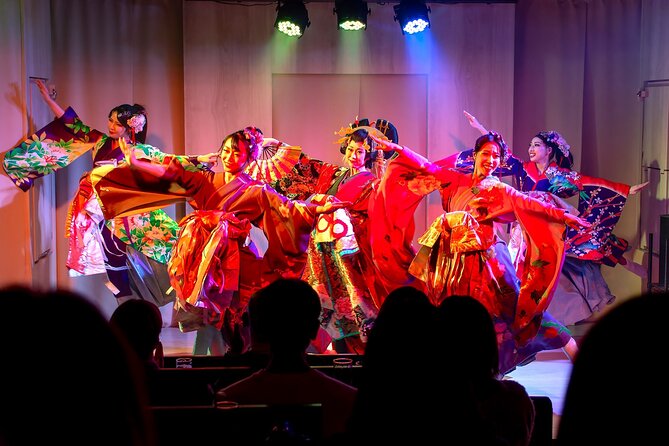
Asakusa-Kaguwa turns a night in Tokyo into a compact stage spectacle: Japanese dance, lion dance, swordplay, costumes, modern music, and laser effects share one 60-minute performance. It is not a formal Kabuki presentation. Think of it as a friendly cultural cabaret with traditional themes and contemporary showmanship.
I like the included drink and the chance to meet performers before the curtain, take photos, and sometimes dress in a kimono. I also like the location, under a covered street in Asakusa, with shops and restaurants nearby. The main caution is that the show can feel more like energetic community theater than polished West End production, and the steep stairs may trouble anyone with limited mobility.
Key points to know
- A one-hour mix of old and new: Expect Japanese dance, a lion dance, samurai sword action, storytelling, modern music, and lighting effects.
- Your ticket includes one drink: Alcohol is available only to people over 20, and additional food or drinks cost extra.
- Come early for photos: The performers may greet you before the show, and kimono dressing is available for photographs.
- Two evening performances: Doors open at 4:00 p.m. for the 5:00 p.m. show, or at 7:00 p.m. for the 8:00 p.m. show.
- Seats are assigned by reservation order: Booking early may help, especially since the theater is small.
- A practical access warning: The venue has steep stairs and no elevator, though staff can assist when needed.
A compact cultural show in the heart of Asakusa
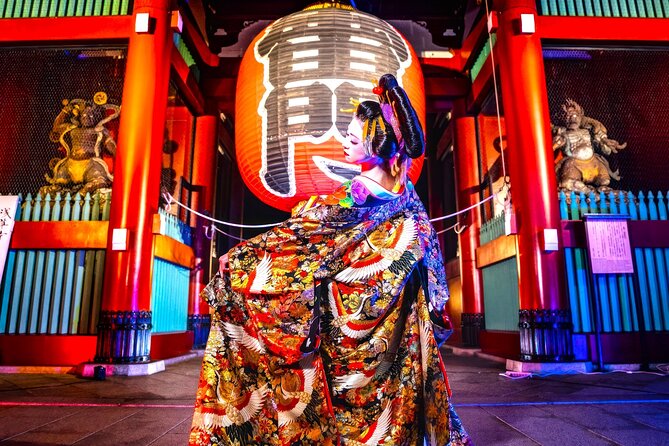
Asakusa-Kaguwa offers an easy way to add live Japanese performance to a Tokyo evening. You do not need to understand Japanese to follow the basic idea. The action is visual, the music carries the mood, and the costumes do much of the storytelling.
The show brings several forms together rather than presenting one strict traditional art. You may see elegant dance, dramatic sword movement, a lion dance, theatrical scenes, contemporary choreography, and colorful lighting in quick succession. One section may feel ceremonial, another playful, and another almost like a pop concert.
That variety is the reason I would choose this for a first cultural performance in Tokyo. In about an hour, you get a broad sample instead of committing to a much longer or more formal production. The tradeoff is that the story may not always be easy to follow. Some sections have little explanation, and the connection between acts can feel loose.
If you expect classical Kabuki, prepare to adjust your expectations. This is not a quiet, highly formal stage performance with elaborate spoken drama. It is a lively cabaret designed to be accessible, visual, and entertaining.
More Cabaret Shows around the world:
- Paris: Moulin Rouge Cabaret Show Ticket with Champagne
★ 4.7 · 16,088 reviews - Paris: Dinner Show at the Moulin Rouge
★ 4.8 · 3,333 reviews - Paris: Crazy Horse Cabaret Show
★ 4.7 · 2,726 reviews
Arriving in Asakusa before the curtain
The theater is at 1-chōme-12-10 Asakusa, Taito City, Tokyo 111-0032. That places you in one of Tokyo’s most popular sightseeing areas, so the show fits neatly after time around Senso-ji, Nakamise shopping streets, or the wider Asakusa district.
The venue sits under a covered street. That is a useful detail in Tokyo’s rain, since you can reach the entrance without spending the final part of your walk exposed to bad weather. Restaurants, shops, and other evening options are close by, so you can build a full night around the performance.
Allow extra time to find the entrance and climb the stairs. The theater is not presented as a large, obvious venue, and one person described the location as slightly hard to find. A mobile ticket makes check-in simple, but I would still arrive at least 30 minutes before showtime.
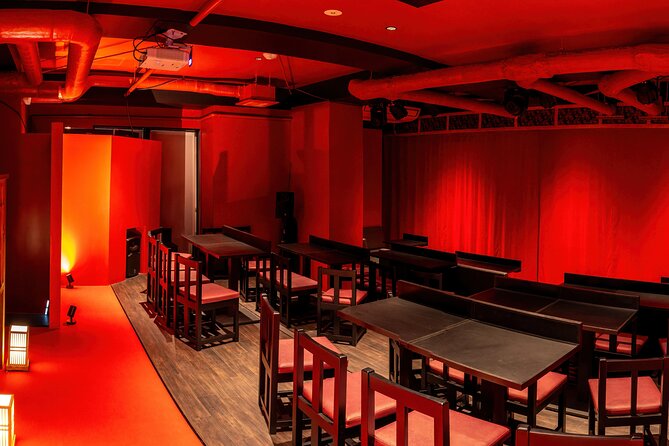
The doors open one hour before the performance begins. That gap is not wasted time. It gives you a chance to collect your included drink, settle into the red-toned Japanese-style interior, and take part in the pre-show atmosphere.
The one-hour performance, act by act
The exact running order can vary, but the format is built around several short pieces. The opening sets the tone with music, costume, and movement rather than a long spoken introduction. From there, the performers shift between traditional images and modern stage energy.
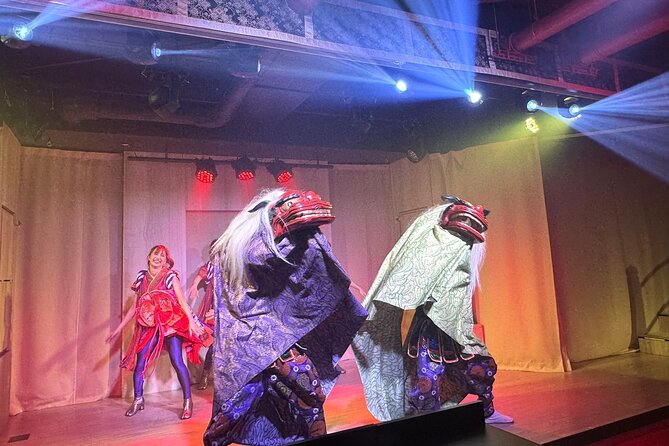
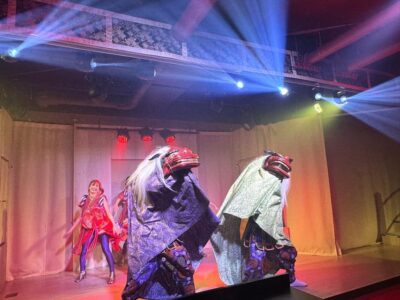
A lion dance is one of the most recognizable cultural moments. This sort of performance is often associated with festivals, so seeing it in a theater gives you a taste of something you might otherwise miss during a short visit to Japan.
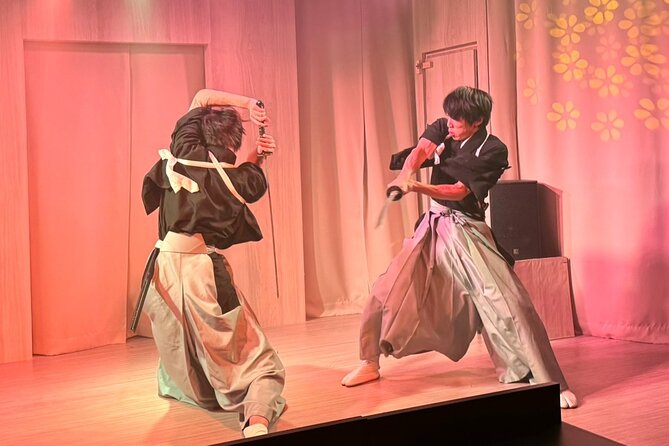
The samurai sword sequence adds action and drama. It is staged as entertainment, not as a historical lesson, but it gives the program a clear Japanese identity and breaks up the dance sections.
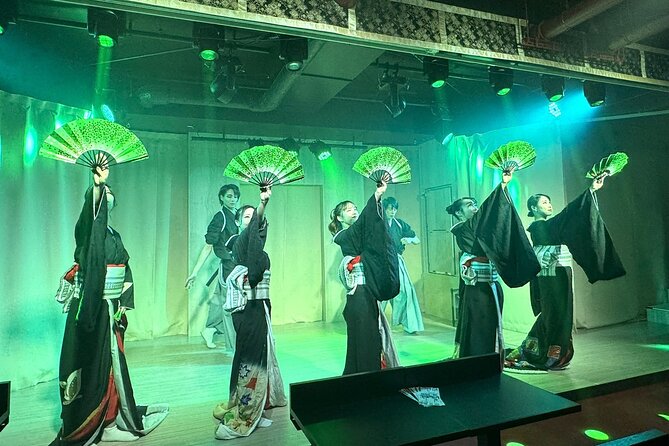
The dancing is the main event. Performers move through different moods, from graceful and controlled to fast and energetic. The costumes are a major part of the appeal, with bright colors and carefully arranged outfits helping each section feel distinct.
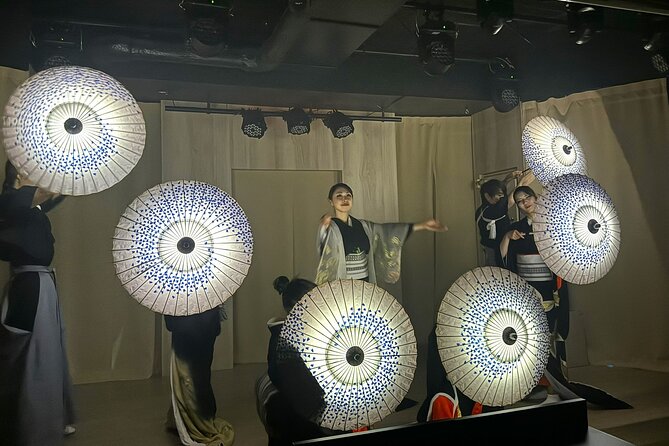
Modern music and laser effects push the program away from a museum-style presentation. One especially memorable element is the laser show, which adds a surprising burst of spectacle to the small stage. If you enjoy live theater with visual effects, this will likely be one of the strongest parts of the evening.
The cast includes performers named Sakura, Nana, Asuka, Tenkumo Yuki, Yusuke, Chiaki, Coco, and Rika. The exact cast may depend on the date, but the company’s approach is clear: the dancers are also part of the social experience around the show.
Meeting the performers and taking kimono photos
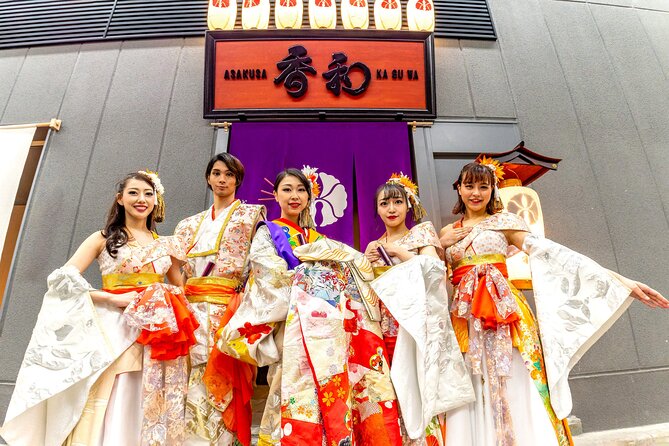
The personal contact before and after the performance is one of Asakusa-Kaguwa’s most appealing features. Performers may come out before the show, speak with you, and pose for photographs. That makes the experience feel less distant than a standard theater production.
You may also have the chance to put on a kimono for a photo. This is particularly useful if you want a tangible memory of the evening but do not plan to rent traditional clothing for a full day. Come early if this matters to you, since the pre-show period is the natural time for these photos.
The interaction is also helpful for families. Children may find it easier to connect with a performer in costume than with a formal stage performance viewed from a distance. Teenagers can enjoy the photo opportunity, music, and lighting without needing to know much about Japanese theater beforehand.
The performers named in the available information include Sakura, Nana, Asuka, Yuki, Yusuke, Chiaki, Coco, and Rika. Since schedules can change, do not book solely to see one particular person. Book for the overall show and treat the cast interaction as an added benefit.
Same evening, a different curtain:
- Seine Dinner Cruise, Eiffel Tower Access and Moulin Rouge Show
★ 4.0 · 2,310 reviews - Tokyo: Japanese Dance Cabaret Theater Asakusa-Kaguwa Ticket
★ 4.8 · 2,270 reviews - Paris: Paradis Latin Cabaret Show with Optional Champagne
★ 4.6 · 2,231 reviews - Paris Moulin Rouge Cabaret Show and Dinner
★ 4.5 · 1,772 reviews
Drinks, food, and the red theater interior
One alcoholic or soft drink is included with admission. The selection includes both types, though alcohol is served only to people over 20. If you prefer beer, that may be a safer choice for a strong drink, since the mixed drinks can be light.
The included drink adds value to a ticket priced at $50.87 per person, especially when you consider the live performance and the pre-show interaction. Still, this is not a full dinner package. Pasta, pizza, fried chicken, snacks, and extra drinks are available separately, but additional orders are not included.
I would eat a proper meal before arriving or plan to order food only if you are comfortable with a simple Western-style menu. The restaurant options are practical rather than a central reason to visit. The main value is the performance.
Inside, the room uses a Japanese-style design with a strong red color scheme. The setting is intimate, so you can see and hear the action clearly. A small theater also means the cast feels close to the audience, though it limits the scale of the production and special effects.
Is the $50.87 ticket good value?
At $50.87, this is not the cheapest evening activity in Tokyo. You can eat well for less, and free cultural sights are easy to find during the day. The question is what you want your money to buy.
The ticket includes a 60-minute live show, one drink, access to the theater, and the chance for pre-show or post-show photos with performers. You also receive a concentrated mix of Japanese-inspired dance and stage traditions without needing to plan several separate activities.
For me, the price makes sense if you value live entertainment and want a simple evening with a clear start and finish. It is also a reasonable choice for a family, since the show is suitable for children and does not require a long attention span.
The value is weaker if you are seeking a formal, high-budget theater production or a detailed explanation of Japanese arts. The program is energetic and attractive, but parts of it may feel loosely connected. One section may have a clear story while another relies mostly on movement, music, or costume.
The booking terms help reduce the risk. You can cancel for a full refund up to 24 hours before the start time. Inside that window, the ticket is nonrefundable, so check your Tokyo plans carefully before committing.
Choosing between the 5:00 p.m. and 8:00 p.m. shows
You have two evening options:
- Doors at 4:00 p.m., show from 5:00 to 6:00 p.m.
- Doors at 7:00 p.m., show from 8:00 to 9:00 p.m.
The first performance works well after afternoon sightseeing in Asakusa. You can watch the show, eat dinner afterward, and still have time for another evening stop.
The second performance is better if you want dinner first or plan to spend the afternoon elsewhere in Tokyo. It also creates a more distinctly evening atmosphere, but you should allow time for the journey back to your accommodation after 9:00 p.m.
Do not arrive at the last minute. Since the doors open an hour before the show and check-in is smoother when you arrive at least 30 minutes early, plan for the venue as a two-hour commitment even though the performance itself lasts one hour.
Seats are assigned by the theater in reservation order. A small room means you should have a clear view from your seat, but booking early is sensible if you care about sitting with your party or improving your place in the assignment order.
Who will enjoy Asakusa-Kaguwa most
I would recommend this show to you if you want:
- A family-friendly evening activity
- Traditional Japanese themes presented in an easy-to-watch format
- Dance, costumes, music, and special effects in one short performance
- A small theater where performers interact with the audience
- A convenient activity near Asakusa restaurants and shops
- A cultural experience that does not require Japanese language skills
It is also a good fit for a first visit to Japan. You can see familiar symbols such as samurai, lions, and kimono alongside modern performance styles. That combination gives you a broad introduction, though not a detailed study of any single art form.
I would hesitate if you want a historically precise production, a fully explained plot, or top-tier professional theater on a large stage. Some sections are campy and theatrical, and the production may feel modest compared with major Tokyo venues. That is not necessarily a flaw, but it is important to know what you are buying.
Practical details for families and mobility needs
Most people can take part, and the show is suitable for families and children. The theater is near public transportation, but the supplied information does not specify a particular station or walking time, so check your route before leaving.
The key access issue is the entrance. The stairs are steep, and there is no elevator. Staff can assist anyone who needs help, but you should contact or alert them in advance if stairs are a serious concern.
The theater’s intimate setup makes it easier to see and hear the performance. It also means you are close to the action, so children may find the show engaging. Seats are assigned, and there is no promise that your party can select exact seats.
Tipping is reportedly encouraged at this venue, so carrying ¥1,000 notes may be useful if you want to thank a favorite performer. This is separate from the ticket price and should be treated as optional.
Should you book Asakusa-Kaguwa?
Book it if you want a fun, visual introduction to Japanese performance rather than a strict Kabuki lesson. The combination of dance, swordplay, lion dance, costumes, lighting, one included drink, and personal contact with the cast gives the evening plenty to remember.
The best plan is to arrive early, use the pre-show time for photos, and keep your expectations focused on cabaret-style entertainment. Choose the 5:00 p.m. show for an early evening in Asakusa, or the 8:00 p.m. show after dinner.
Skip it if you need a polished, large-scale production with a clear plot and detailed cultural explanations. For everyone else, especially families, first-time visitors to Japan, and anyone who enjoys live dance, the $50.87 price is reasonable for a compact and unusual Tokyo night.
FAQ
How long does the Asakusa-Kaguwa experience last?
The performance lasts 60 minutes, while the full visit takes about two hours because the doors open one hour before the show.
What time are the performances?
The first show runs from 5:00 p.m. to 6:00 p.m., with doors opening at 4:00 p.m. The second runs from 8:00 p.m. to 9:00 p.m., with doors opening at 7:00 p.m.
What does the ticket include?
The ticket includes the 60-minute traditional Japanese cultural dance show and one alcoholic or soft drink.
Is alcohol included for children?
No. Alcohol is served only to people over 20 years of age. Soft drinks are also available.
Is food included?
No. Additional food and snacks cost extra. Available choices include pasta, pizza, fried chicken, and snacks.
Can children attend the show?
Yes. The experience is suitable for families and children.
Can I take photos with the performers?
You may have the opportunity to meet performers and take photos before or after the show. Kimono dressing may also be available for photographs.
Are seats selectable?
Seats are assigned by the theater in the order reservations are received.
Is the venue accessible by elevator?
No. The venue has steep stairs and no elevator. Staff can assist people who need help.
Can I cancel my booking?
You can cancel for a full refund at least 24 hours before the experience start time. Cancellations or changes made within 24 hours are not accepted and are not refunded.
Newest shows around the world
- Manchester: FunnyBoyz Benidorm Bingo Cabaret Show★ 3.9 · 6 reviews
- Magic World ● Magic Variety Show★ 4.0 · 3 reviews
- Khaolak:Finger Food Guided Tour with Cabaret Show★ 4.0 · 4 reviews
- London: A Night of Theatrics! Cabaret Show★ 4.2 · 6 reviews
- London’s West End: Ticket to Cabaret at the Kit Kat Club2 reviews
- Barcelona: Eros Cabaret Show & Drinks in the Erotic Museum★ 3.8 · 6 reviews
- Chiang Mai: Ladyboy Cabaret Show with Dinner and Drinks★ 4.7 · 7 reviews
- Pennsylvania: Jukebox Jive Variety Show★ 4.8 · 5 reviews
Tokyo Cabaret Shows, side by side.
Japanese Dance Cabaret Theater Asakusa-Kaguwa Ticket
Read our review →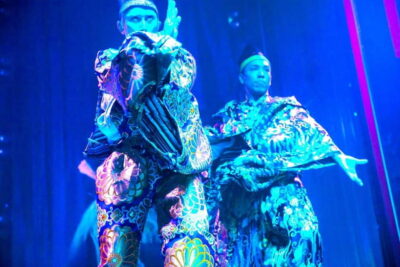
Tokyo GINZA: KONPARU Japanese Cabaret Show with Drink
Read our review →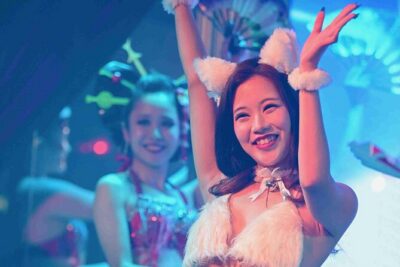
Japanese Style Variety Show with Dance,Magic & Dinner
Read our review →Browse the lists this show appears in